


Key Takeaways
- Anti-riot helmets keep your head safe from hits, heat, and chemicals. They help lower the chance of getting hurt in risky situations.
- Pick helmets made of tough materials like ABS or polycarbonate. These materials pass strict tests to handle impacts and prevent punctures.
- Get helmets with memory foam padding for extra comfort. This padding absorbs shocks and helps protect your brain from serious injuries.
- Make sure the helmet has a full shell and an anti-fog face shield. These features give full protection and let you see clearly in messy situations.
- Look for helmets with safety labels like NFPA 1971 or EN 13087-2. These labels show the helmet meets top safety rules.
Materials in Anti-Riot Helmets
Strong ABS and Polycarbonate Shells
The outside of an anti-riot helmet protects you from hits. Makers use tough ABS and polycarbonate materials for strength. These materials do not crack or bend under pressure.
ABS and polycarbonate shells pass strict safety tests. For example:
| Test Type | Result |
| Impact protection | Visor handles 4.9J energy |
| Strength against bullets | Visor stops 1g bullet at 150m/s |
| Energy absorption | Shell absorbs 49J energy |
| Puncture resistance | Shell resists 88.2J puncture |
| Fire resistance | Burns for ≤ 10 seconds |
These tests show how well these shells protect you. Helmets with these materials keep you safe from physical harm.
Fire-Resistant and Chemical-Resistant Coatings
Anti-riot helmets often face fire and harmful chemicals. To handle this, helmets get special coatings to block heat and chemicals. These coatings stop damage and keep you safe in risky situations.
New material technology has made these coatings even better. Reports show these coatings improve safety and ease of use. History proves they lower injuries during riots and protests. With these coatings, your helmet becomes a strong shield.
Memory Foam for Comfort and Safety
Inside the helmet, memory foam padding absorbs shocks. It shapes to your head, giving a snug and comfy fit. It also spreads out impact forces to protect your head.
Research shows memory foam helmets work very well. Helmets with WAVECEL foam cut rotational force by 73%. The chance of serious brain injury drops from 59% to 1.2%. These features make anti-riot helmets safer for dangerous events.
Protective Design Features
Full-Coverage Shell for Head and Neck
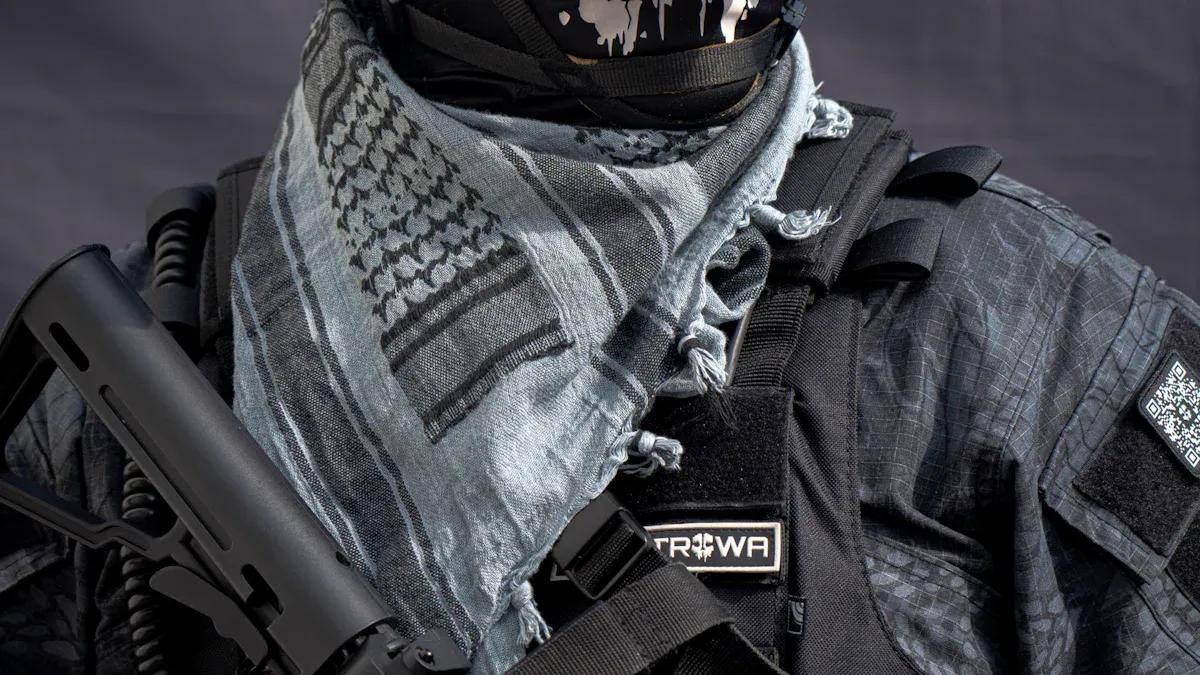
A full-coverage shell is very important in anti-riot helmets. It protects both your head and neck from dangers. This design keeps all sensitive areas safe during risky events. Whether it’s flying objects, hard hits, or chemical splashes, the shell blocks them.
The extra coverage also helps prevent neck injuries in chaotic places. By guarding your head and neck, the helmet gives full protection. This lets you focus on your job without worrying about getting hurt.
Tactical Face Shields with Anti-Fog Coating
Face shields are key for keeping your face safe from harm. They block projectiles, chemicals, and other dangers. But fogging can make it hard to see clearly. To fix this, modern helmets have anti-fog coatings on their shields.
In May 2025, WeeTect made a shield with anti-fog on one side. This new design helps you see better, even in humid or stressful times. The shield also resists scratches, staying clear for longer use. These features make it perfect for places where safety and vision matter. You can stay protected and still see clearly with this advanced shield.
Penetration and Projectile Resistance
Anti-riot helmets must handle hits from sharp and flying objects. Makers use strong materials like polycarbonate, fiberglass, and ABS plastic. These materials go through tough tests to meet safety rules.
| Material | Test Results |
| Polycarbonate | Handles hits from flying and blunt objects |
| Fiberglass | Blocks sharp objects from breaking through |
| ABS Plastic | Offers safety in dangerous situations |
This table shows how well these materials work in different cases. Polycarbonate absorbs hits, fiberglass stops sharp objects, and ABS plastic gives all-around safety. With these materials, your helmet can protect you in tough situations.
Comfort and Fit in Anti-Riot Helmets
Adjustable Straps and Quick-Release Buckles
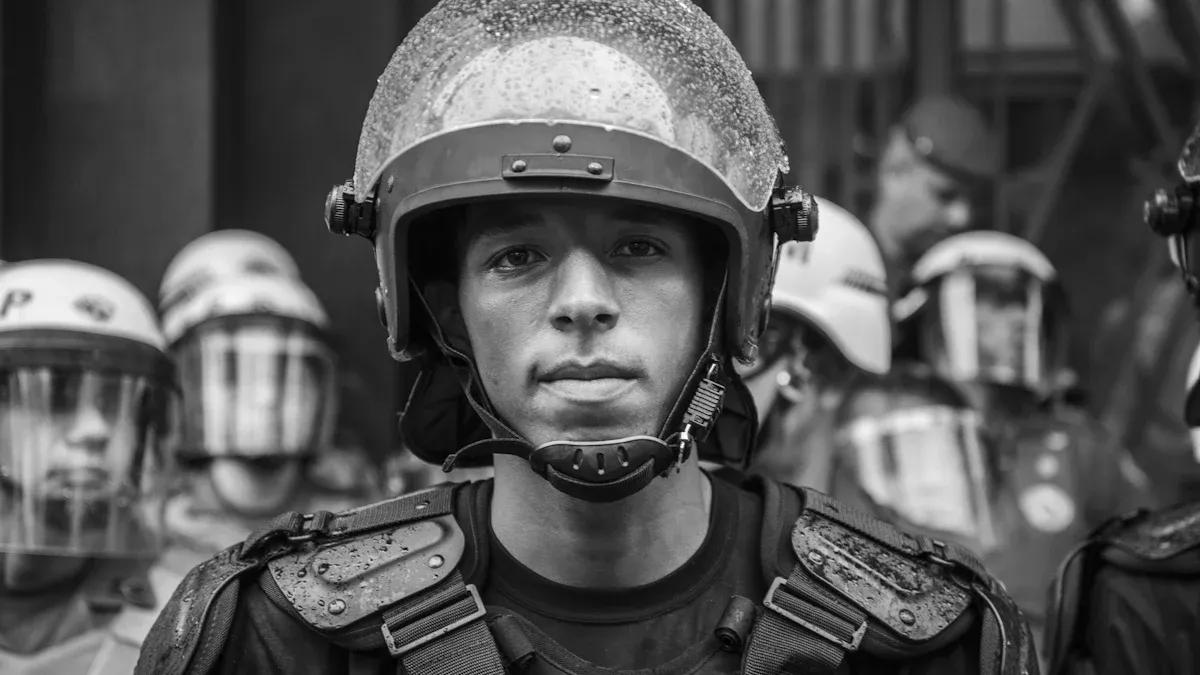
Anti-riot helmets need to fit securely to work well. Straps can be adjusted to match your head size. This keeps the helmet steady during fast movements. Buckles that release quickly help you take off the helmet fast. These features make the helmet safer and save time in emergencies.
New designs make adjustments easier for users. Some helmets let you tighten straps with one hand. You don’t need to remove gloves to adjust them. This helps you stay focused while keeping your head protected.
Ventilation Systems for Temperature Control
Wearing a helmet for a long time can get hot. Ventilation systems help cool your head by letting air flow inside. Good airflow reduces sweat and keeps you comfortable.
Tests show different parts of helmets cool at different speeds:
- Side vents refresh air at 06 times per second.
- Back vents work faster, refreshing air up to 1 time per second.
- Tilting the helmet can improve airflow in less ventilated spots.
These results show why ventilation is important. Helmets with good airflow stop overheating. This helps you stay focused and comfortable in tough situations.
Ergonomic Padding for Extended Wear
Long hours wearing a helmet can feel tiring. Special padding makes helmets more comfortable for long use. The padding fits the shape of your head and spreads out pressure. This reduces strain and makes it easier to wear.
Good padding also absorbs small shocks and vibrations. Many helmets now use memory foam that molds to your head. This gives a snug fit without causing discomfort.
When picking a helmet, choose one with soft padding. It helps you stay comfortable and perform better in stressful situations.
Functional Enhancements
Built-In Communication Systems
Modern anti-riot helmets now have communication tools for teamwork. These systems help you talk to your team quickly. They work well even in noisy and chaotic places.
Key features include:
- Sharing information fast for better teamwork.
- Smart tech that improves how teams handle tasks.
- Tools that change how anti-riot plans are made.
These features let you send important updates fast. Your team can react better to sudden changes. With these systems, your helmet is not just safety gear—it helps you plan smarter.
Compatibility with Respirators and Gas Masks
Anti-riot helmets fit well with respirators and gas masks. This keeps you safe from harmful air without removing your helmet.
| Feature | Description |
| System Type | Helmet-mask combo for riot and dangerous air situations. |
| Integration | Works with HM50 mask and Schuberth P100N helmet. |
| Respiratory Protection | Protects breathing while keeping the helmet on. |
| Compatibility | Matches German Police helmets for non-CBRN use. |
| Deployment | Uses proven 50 Series mask for tough conditions. |
This design protects you from chemical and harmful air threats. It also lets you work safely in extreme places while keeping your head covered.
Modular Attachments for Customization
Custom helmets let you add tools for different needs. Modular Integrated Communication Helmets (MICH) have spots for extra gear. You can attach cameras, lights, or shields.
This makes the helmet useful for many tasks. Whether you need better vision, communication, or safety, these add-ons help. Modular helmets are great for people working in risky jobs.
Standards and Certifications
Compliance with Safety Standards (e.g., Z611-02)
Anti-riot helmets follow strict rules to keep you safe. Standards like Z611-02 and EN 13087-2 set rules for strength, heat resistance, and durability. These rules make sure helmets work well in dangerous situations.
For example, EN 13087-2 checks how helmets handle shocks. A heavy object is dropped on the helmet to test it. This shows how well the helmet absorbs hits. Helmets that pass these tests give you trust in their safety. Always check for these standards when picking a helmet.
Testing for Extreme Temperatures and Humidity
Helmets are tested to work in tough weather. Hot, cold, or wet conditions can weaken them. To stop this, makers test helmets in labs to mimic these challenges.
For example, helmets face extreme heat and freezing cold to check for damage. They are also tested in humid air to ensure moisture doesn’t weaken them. These tests prove your helmet will protect you in any weather, from hot protests to icy missions.
Certification for Impact and Flame Resistance
Helmets must handle hits and fire to keep you safe. They go through many tests to check their strength.
| Test Type | What It Checks | Safety Requirement |
| Impact Test | Measures force during hits. | Force must stay below 260-300 G’s. |
| Positional Stability Test | Checks if helmet stays on during movement. | Helmet should not fall off. |
| Flame Resistance Test | Tests how helmet reacts to fire. | No flames or glow after 5 seconds. |
Helmets also must not pass more than 3780 N (850 lbf) of force during hits. Acceleration over 200 Gn should last less than 3 milliseconds. These tests prove helmets can handle hits and heat, keeping you safe in tough situations.
Tip: Look for helmets with labels like NFPA 1971 or EN 13087-2. These show the helmet passed tough safety tests.
Anti-riot helmets use strong materials and smart designs to protect you. They guard against hits, fire, and harmful chemicals. These helmets are also made to be comfortable for long use. Picking the right helmet means focusing on safety and your needs. Check for safety labels and add-ons to make it more useful. A good anti-riot helmet gives you safety and tools for tough situations.
FAQ
What does an anti-riot helmet do?
An anti-riot helmet keeps your head, face, and neck safe. It protects you from hits, flying objects, fire, and dangerous chemicals. Its design makes it both safe and comfortable, which is why police and security teams use it.
How can you pick the right size for an anti-riot helmet?
Wrap a tape measure around your head above your eyebrows. Check the size chart from the helmet maker to find your fit. The helmet should feel snug but not too tight. This ensures it stays comfy and keeps you safe.
Can you wear glasses with an anti-riot helmet?
Yes, most helmets work well with glasses. Choose helmets with padding you can adjust and enough space inside. Some helmets also have shields that fit over glasses without pressing on them or causing pain.
How do you take care of an anti-riot helmet?
Wash the helmet with gentle soap and water. Don’t use strong cleaners that might harm the shell or coating. Check often for cracks, loose straps, or worn-out padding. Replace the helmet if it’s damaged or doesn’t meet safety rules.
Are anti-riot helmets good for bad weather?
Yes, these helmets are tested for very hot, cold, or wet weather. They keep working well in tough conditions, so you can trust them anywhere.