


Key Takeaways
- Military uniforms changed over time to fit new war needs and society.
- Camouflage became important in the 1900s, helping soldiers hide better and stay safer in battles.
- Today’s uniforms use smart tools and new materials to keep soldiers comfortable, healthy, and strong during fights.
- Uniforms show national pride and culture through their colors and styles.
- The move from basic clothes to advanced uniforms shows the need for teamwork, usefulness, and safety in the military.
The Start of Military Uniforms in Ancient Times
How Uniforms United Ancient Soldiers
Long ago, military uniforms helped soldiers feel united and recognized. Armies like those in Rome and Greece used shared clothing and symbols. Roman soldiers wore simple tunics and sandals that worked well for their needs. These outfits made them stand out from regular people and enemies. Greek warriors wore leather skirts and bronze helmets. These gave protection and showed their role as fighters.
History shows ancient armies used many ways to stay united. Leaders like Spartacus gained loyalty with smart plans and strong leadership. Emotions like fear or pride helped soldiers stick together. Clear rules made sure soldiers knew their jobs, giving them purpose.
| Strategy Type | Description |
| Logical Reasoning | Using clear ideas to keep soldiers organized and united. |
| Emotional Appeals | Stirring feelings like fear or pride to build loyalty. |
| Tactical Disunity | Splitting enemies to weaken them, then reuniting for strength. |
These methods, along with matching uniforms, gave soldiers a shared identity. This was key to winning battles.
Local Resources Shaped Early Uniforms
Early military uniforms were made from what was nearby. Wool was common because it was strong and easy to find. Colors mattered too. Later, blue and buff became popular in U.S. Army uniforms, showing the use of local dyes.
| Feature | Description |
| Material | Wool, which was easy to find and durable. |
| Colors | Blue and buff, later used in U.S. Army uniforms. |
| Historical Significance | Washington wanted uniforms to show professionalism and leadership. |
In Greece and Rome, clothes were made for comfort and movement. Tunics and cloaks fit the weather and land. These outfits also showed a soldier’s role, stressing unity and skill. These early ideas helped shape the military uniforms we know today.
Military Uniforms in the Middle Ages and Renaissance
Symbols and Religion Shaped Uniforms
In the Middle Ages, symbols were key in military clothing. Knights and soldiers used coats of arms on shields and banners. These showed loyalty and helped tell friends from enemies. Tournaments also displayed these designs, mixing war and social events. The Armorial de la Toison d’Or shows knights wearing detailed symbols, making uniforms look fancy. But repeated designs sometimes caused confusion in battles.
Religion also shaped military outfits during this time. Crusaders wore tunics with crosses to show their faith. These clothes protected them and showed their holy mission. Groups like the Knights Templar had special uniforms. They wore white cloaks with red crosses to show their vows and unity.
First Steps Toward Uniforms
The Middle Ages started efforts to make soldier outfits similar. Bigger armies needed matching clothes to work better together. Uniforms helped soldiers know their teammates and feel united. Over time, soldiers stopped wearing random clothes and started wearing matching ones.
By the Renaissance, this idea grew stronger. Soldiers needed tough, easy-to-make clothes. Cromwell’s New Model Army in the 1600s showed this change. Soldiers wore red coats, even though the dye faded quickly. This was a big step toward professional armies.
As armies became more advanced, uniforms became more alike. Matching colors and styles helped soldiers stay disciplined and effective. These changes led to today’s military uniforms, which mix usefulness with meaning.
The Rise of Professional Military Uniforms in the 18th and 19th Centuries
National Identity and Symbolism in Military Attire
In the 18th and 19th centuries, uniforms showed national pride. Political events, like the French Revolution, changed uniform designs. After 1789, French uniforms used colors for liberty and equality. Soldiers wore a tricolor badge to show loyalty to the National Guard.
Uniforms also showed culture through colors and designs. British soldiers wore red coats, symbolizing their empire. Early American soldiers had mismatched uniforms during the Revolutionary War. Later, blue became their main color, inspired by George Washington. This choice reduced confusion and built pride.
Symbols went beyond clothing. Tattoos became popular during the American Revolution. Sailors used tattoos to show loyalty and origins. Leaders like Frederick Roberts supported tattoos for unity and identifying casualties. These practices tied uniforms to national identity.
Practicality and Functionality in Design
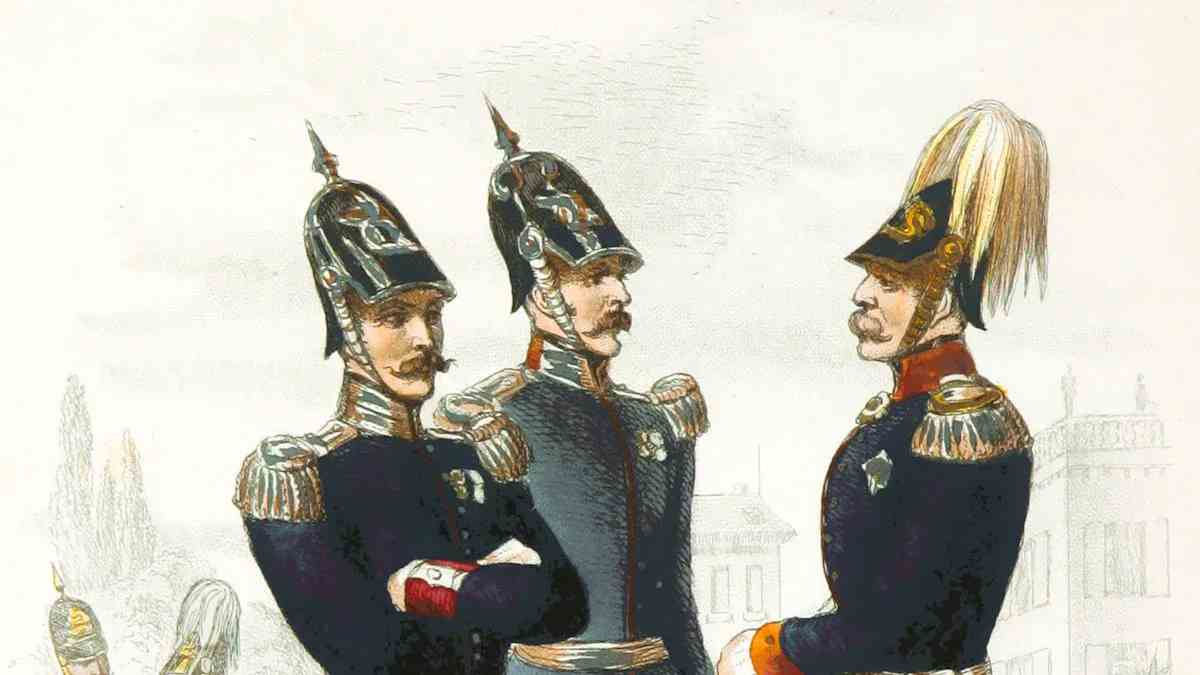
As armies grew, uniforms became more practical. Matching outfits helped soldiers work better together. European armies used different colors to stand out. British wore red, French chose gray or white, Prussians used blue, and Russians picked green. These colors helped tell allies from enemies.
Uniforms were also designed to scare opponents. Tall hats and fancy decorations made soldiers look strong. The Potsdam Giants, tall Prussian soldiers, used uniforms to show power. Their height and outfits made them intimidating.
Materials mattered too. Officers wore finer fabrics with detailed designs. Regular soldiers had simpler uniforms. Dyes often caused uneven colors, and white uniforms got dirty fast. Armies gave new uniforms often to keep soldiers ready.
By the early 19th century, uniforms became more decorative. After the Napoleonic Wars, designs focused on looks and new technology. Better materials and tailoring improved uniforms, leading to today’s durable designs.
Changes in the 20th Century: Technology and Strategies
Camouflage Becomes Key in Military Uniforms
The 20th century brought big changes to military uniforms. Camouflage became an important part of their design. Armies realized soldiers needed to blend into their surroundings. This helped them stay hidden during battles. Bright uniforms no longer worked because of new weapons and planes.
During World War I, soldiers used mud and leaves to hide. Later, armies made special camouflage patterns for different places. For example, the German Army created new ways to solve battlefield problems. By the 1980s, the U.S. military used the Battle Dress Uniform with woodland camouflage. In the 1990s, they introduced the Desert Camouflage Uniform for dry areas.
| Year | Development | Description |
| 1981 | Battle Dress Uniform | Used a four-color woodland camouflage pattern. |
| Early 1990s | Desert Camouflage Uniform | Added a three-color desert pattern for dry regions. |
| 2002 | New Camouflage Uniforms | Seven patterns made for different terrains. |
| 2012 | Ongoing Camouflage Study | Research for better camouflage in the future. |
Today, camouflage uses artificial intelligence (AI) to improve designs. AI helps create patterns that change with the environment. This makes soldiers harder to spot. The move from simple to digital camouflage shows how science and technology shape military tactics.
Better Protective Gear and Body Armor
The 20th century also improved protective gear for soldiers. Early body armor was heavy and hard to move in. New materials and designs made it lighter and more useful.
Modern body armor uses strong but light materials like Kevlar and ceramic plates. These protect soldiers without slowing them down. Modular designs let soldiers adjust their armor for different dangers. This makes it safer and more flexible.
| Innovation Milestone | Description |
| NIJ Standard 0101.07 | Made armor lighter and more comfortable with better materials. |
| NIJ Standard 0123.00 | Created designs that fit men and women better. |
| Modular Design | Allowed soldiers to change armor for different threats. |
| Material Improvements | Used stronger materials like Kevlar and ceramics for better safety. |
Still, some problems remain. For example, the British Army’s Enhanced Combat Body Armor (ECBA) had cracks in its ceramic plates. About 120,000 sets were recalled because of safety issues. Lightweight armor is easier to wear but can be less protective.
These updates show the effort to balance safety, comfort, and usefulness. With new materials and ideas, today’s protective gear helps soldiers handle modern challenges better.
Modern Military Uniforms: Innovation and Technology
Strong and Comfortable Materials
Today’s military uniforms are made to last and feel good. Scientists created fabrics that handle tough conditions and keep soldiers safe. For example, a mix of nylon and cotton now resists fire and repels bugs. These changes protect soldiers without making uniforms uncomfortable.
Uniforms must survive rough weather, washing, and hard use. New materials can resist flames and keep bugs away, making them great for hot or dry places. These fabrics also let air through, keeping soldiers cool. Comfortable uniforms help soldiers stay less tired and perform better.
Adding Smart Technology to Uniforms
Smart technology has made military uniforms more useful. Built-in systems now check health, speed up recovery, and prepare soldiers for action. For instance, special fabrics improve blood flow and ease sore muscles. Antibacterial materials lower the chance of infections, keeping soldiers healthier.
Smart technology is changing how soldiers train and stay fit. It tracks performance and might replace old fitness tests. A study by a Taiwanese company and the U.S. Space Force is testing how reliable and helpful these devices are.
The table below shows some key smart uniform features:
| Feature | What It Does |
| Health Monitors | Tracks health and sends data to medics during emergencies. |
| Compression Fabrics | Helps blood flow and reduces muscle pain for faster recovery. |
| Better Designs | Made to keep soldiers safe and prevent injuries during missions. |
| Germ-Fighting Fabrics | Stops infections from small wounds, keeping soldiers healthier. |
| Advanced Camouflage | Uses tiny materials to hide soldiers from heat-detecting tools. |
| Wearable Tech | Improves soldier performance with smart designs and materials. |
These updates show how modern uniforms use new technology to keep soldiers safer, healthier, and ready for action.
Military uniforms have changed a lot over time. They now show the needs and tools of each era.
- New weapons, like moving from bronze to titanium, changed uniform materials.
- The Military Revolution updated uniforms to match new war strategies.
- Camouflage, first used in World War I, helped soldiers hide better.
In the 18th and 19th centuries, uniforms also became part of civilian life. From bringing ancient armies together to using smart technology today, uniforms keep changing while staying meaningful.
FAQ
What is the purpose of military uniforms?
Military uniforms have many uses. They protect soldiers and show who is on their side. Uniforms also represent a country’s pride and bring soldiers together. They help armies stay organized and work well as a team.
Why did camouflage become important in military uniforms?
Camouflage helps soldiers hide better in their surroundings. It makes them harder to see, especially with modern weapons like planes and long-range guns. Different patterns and colors are used for places like forests or deserts.
How has technology improved modern military uniforms?
Technology made uniforms stronger and smarter. New fabrics can resist fire, keep bugs away, and feel more comfortable. Smart features check health, help muscles recover, and adjust to weather, making uniforms safer and more useful.
What materials are commonly used in military uniforms today?
Today’s uniforms use tough materials like nylon, cotton blends, Kevlar, and ceramics. These materials are strong, flexible, and protect soldiers in tough conditions. They help soldiers do their jobs in all kinds of places.
How do military uniforms reflect national identity?
Uniforms show a country’s culture and values through colors and designs. For example, British red coats showed power, and American Revolutionary War uniforms showed teamwork and pride.